
Introduction: Understanding Your Debt Challenges
Are you overwhelmed by multiple bills and struggling to keep track of your payments? Many people face similar challenges, and understanding your options can be crucial in regaining control of your financial situation. In this article, we will explore two popular debt management strategies: debt consolidation and debt settlement. By the end, you’ll have actionable debt management tips to help you choose the best path forward.
What Is Debt Consolidation?
Debt consolidation involves combining multiple debts into a single loan or payment plan. This approach can simplify your finances and potentially lower your monthly payments. Here are some key features:
- Single Payment: You’ll only have to make one payment each month.
- Lower Interest Rates: Consolidating debts may allow you to secure a lower interest rate.
- Improved Credit Score: It may help improve your credit score over time if managed properly.
Types of Debt Consolidation Options
When considering debt consolidation options, here are a few methods to explore:
- Personal Loans: Unsecured loans that can be used to pay off debts.
- Home Equity Loans: Loans against your home’s equity, often with lower interest rates.
- Balance Transfer Credit Cards: Credit cards that offer a low introductory rate for balance transfers.
What Is Debt Settlement?
Debt settlement is a strategy where you negotiate with creditors to reduce the total amount you owe. This strategy can be beneficial for those who are unable to pay their debts in full. Here’s what you need to know:
- Reduced Debt Amount: You may pay less than what you originally owed.
- Potential Impact on Credit Score: Settling debts can negatively affect your credit score.
- One-Time Payment: Settlements can often be a one-time payment of an agreed-upon amount.
How Debt Settlement Works
The debt settlement process typically involves the following steps:
- Assessment: Evaluate your financial situation and determine if settlement is the right choice.
- Negotiation: Contact creditors to negotiate a lower payment amount.
- Agreement: Reach a settlement agreement and make the agreed payment.
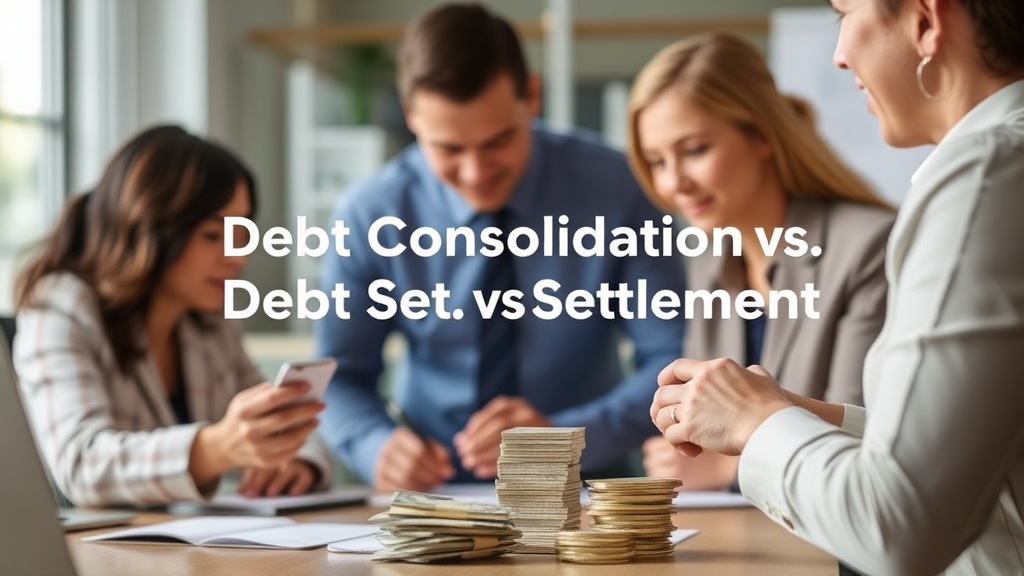
Debt Consolidation vs. Debt Settlement: Which Is Right for You?
Choosing between debt consolidation and debt settlement depends on your unique financial circumstances. Consider the following factors:
- Current Debt Levels: If your debt is manageable, consolidation may be better.
- Credit Score: If your score is already low, debt settlement might be an option to consider.
- Ability to Pay: Determine whether you can afford to consolidate or if you need to negotiate a settlement.
Questions to Ask Yourself
Before making a decision, ask yourself:
- Do I have a stable income to support a consolidation loan?
- Am I willing to risk my credit score for a potentially lower debt amount?
- How much total debt do I currently have?
Practical Debt Management Tips
No matter which option you choose, here are some essential debt management tips:
- Create a Budget: Track your income and expenses to identify areas for savings.
- Prioritize Payments: Focus on high-interest debts first while maintaining minimum payments on others.
- Seek Professional Help: Consider consulting with financial advisors or credit counseling services for guidance.
- Stay Informed: Keep up with your credit reports and scores to monitor your financial health.
Best Debt Management Programs Available
Several programs can assist you in managing your debt effectively. Consider these:
- Credit Counseling Services: Nonprofit organizations that provide budget counseling and debt management plans.
- Debt Management Plans (DMPs): Structured plans that help you pay off your debts over time with lower interest rates.
- Debt Settlement Companies: Professionals who negotiate with creditors on your behalf, typically for a fee.
Conclusion: Take Control of Your Financial Future
Understanding the differences between debt consolidation and debt settlement is vital in finding the best solution for your financial situation. By implementing these debt management tips and considering your unique circumstances, you can take meaningful steps toward achieving financial freedom. Whatever path you choose, remember that taking action is the first step towards a brighter financial future.
If you’re struggling with debt, don’t hesitate to seek help. Explore the best debt management programs available and consult professionals to find the solution that works best for you.
Disclosure: This post contains affiliate links. | Hinweis: Affiliate-Links. | Nota: Link affiliati.