
Understanding Your Debt Relief Options
Are you feeling overwhelmed by multiple debts and unsure of how to regain control of your finances? If so, you might be considering debt consolidation or debt settlement. Both options aim to help you manage your debts more effectively, but they work in very different ways. In this article, we will explore the advantages and disadvantages of each method, helping you determine which is right for you.
What is Debt Consolidation?
Debt consolidation is the process of combining multiple debts into a single loan with a lower interest rate. This can simplify your monthly payments and often makes it easier to manage your debt.
How Debt Consolidation Works
- Evaluate Your Debts: List out all your debts, including credit cards, personal loans, and any other outstanding balances.
- Research Consolidation Options: Look into personal loans, home equity loans, or balance transfer credit cards.
- Choose a Lender: Compare interest rates and terms to find the best deal.
- Apply for a Loan: Once you’ve chosen the right option, complete the application process.
- Pay Off Existing Debts: Use the funds from your new loan to pay off your existing debts.
Pros and Cons of Debt Consolidation
- Pros:
- Simplifies monthly payments.
- Potentially lower interest rates.
- Improves credit score if payments are made on time.
- Cons:
- May require good credit to qualify for favorable rates.
- Does not reduce total debt owed.
- Risk of accumulating more debt if spending continues.
What is Debt Settlement?
Debt settlement involves negotiating with creditors to pay less than what you owe. This can result in significant savings but may have negative consequences for your credit score.
How Debt Settlement Works
- Assess Your Financial Situation: Determine how much you owe and which debts are eligible for settlement.
- Contact Creditors: Negotiate directly with creditors or hire a debt settlement company.
- Agree on a Settlement Amount: Reach an agreement on a reduced amount that you can pay.
- Make Payments: Pay the agreed-upon settlement amount, often in a lump sum.
Pros and Cons of Debt Settlement
- Pros:
- Can significantly reduce the amount owed.
- Settling debts can relieve financial stress.
- May be faster than traditional repayment methods.
- Cons:
- Can severely impact your credit score.
- Creditors may not accept settlements.
- Potential tax implications on forgiven debts.
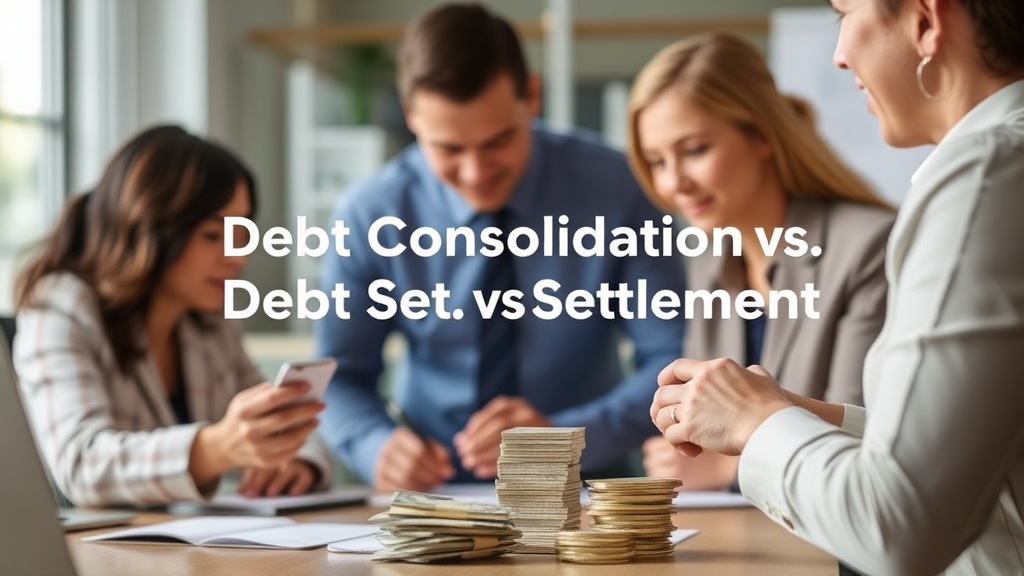
Debt Consolidation vs. Debt Settlement: Which is Right for You?
Deciding between debt consolidation and debt settlement depends on your individual financial circumstances. Here are some factors to consider:
- Credit Score: If your credit score is good, debt consolidation may be a better option. If your score is poor, debt settlement might be more feasible.
- Total Debt Amount: For smaller debts, consolidation may be simpler. For larger debts, settlement can provide significant savings.
- Financial Goals: If your goal is to improve your credit score, consolidation is preferable. If you’re looking for immediate relief, settlement may be ideal.
- Long-Term Commitment: Consolidation requires consistent payments, while settlement may be a quicker resolution.
Practical Tips for Choosing the Right Option
- Evaluate Your Finances: Take a comprehensive look at your debts, income, and expenses.
- Consult a Financial Advisor: Get professional advice tailored to your situation.
- Research Options: Look into various lenders for consolidation and reputable companies for debt settlement.
- Consider the Long-Term Impact: Think about how each option will affect your financial future.
Conclusion: Take Control of Your Financial Future
Understanding the differences between debt consolidation and debt settlement is crucial for making an informed decision. Both options have their pros and cons, and the best choice will depend on your unique financial situation. Take the time to evaluate your debts, consult professionals if needed, and choose the path that aligns with your long-term goals. Don’t let debt control your life—take action today!
For personalized advice, consider reaching out to a financial advisor or a debt management professional. Start your journey towards financial freedom now!
Disclosure: This post contains affiliate links. | Hinweis: Affiliate-Links. | Nota: Link affiliati.